Pull out the high school French lit, Chez Shea’s Tartare is in need of some Bordeaux.
There’s something significant about the marriage of meat and egg. It poses the disputed inaugural presence of the chicken or the egg to quarrel over while also putting an aesthetically pleasing dish of food on display. The French typically tend to spearhead this culinary phenomenon, from sandwiches like a croque madame (ham and Gruyere cheese sandwich coated with Béchamel sauce and topped with a fried egg) to simple green lentils or kale decorated by a miniature quail egg. Long story short, the French know what came first and they’re not telling, they’re just unifying the two.
The gastronomic glamor of French cuisine began in the early 17th century with one of the first how-to cookbooks by Chef La Varenne and has grown beyond its country’s borders thanks to many modern French chefs of today like world-renowned food innovator Chef Jacques Pépin, American’s darling chef Eric Ripert and many more steady hands.
Although Seattle might be lacking in French eatery by volume, but quality is no question with options like the bistros of Le Pichet or Presse, the affordable fare of Toulouse Petit or Bastille and of course the Market’s French mecca of Maximilien, Cafe Champagne and Chez Shea.
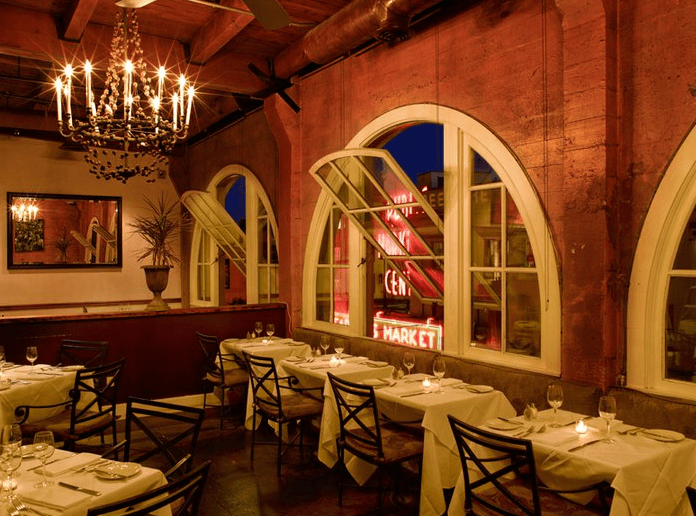
Slip up the winding staircase of the Corner Market Building that sits across the cobblestone from Pike Place and climbers will eventually hit Chez Shea, the fine dining French-inspired bistro. Focused on a seasonal, rotating a la carte menu, Chez Shea offers the intimacy and romance diners might only find in the city of light. Comfortable yet chic, the eatery is kind to emptier pockets with menu items that appease many price ranges and also offers upscale options for those who seek to celebrate. After a renovation last spring, Chez Shea took on a much-deserved facelift and shouldn’t look back.

The Dish: American Wagyu Beef Tartare ($13) — The classically French appetizer has made its way into many Northwest seafood restaurants as a “red meat alternative” due to its fresh and flavorsome approach. Light, juicy and undeniably raw, the fattiness of the Wagyu-style beef gives the dish a creamy plushness that is only enhanced by the quail egg that waits to be cracked on the circular mound of meat. Cloaked with shaved fennel and Parmesan cheese, the Caselvetrano olives and capers bring a spry tang that is softened with drizzles of vicious olive oil.
The Variety: Cabernet Sauvignon-based blend — Cabernet Sauvignon tends to be more often than not boisterous and opulent so when blending with more subtle and nuanced varieties such as Merlot and Cabernet Franc, the ideal result is to take the best of both worlds and pairs nicely with more mild red meats.
On the left-bank river side of the Bordeaux region in France, blending with Cabernet is their claim to fame in both Saint Julien (san ju-liawn) and Pauillac (poo-yak). Saint Julien leans on the softer side of Cabernet blends with engaging aromatics where Pauillac, which is most famous for its three grand cru chateaus Lafite, Latour and Mouton-Rothschild, sides on the bolder, fuller styles of the grape variety.
The latter mentioned region might charge an arm and a leg while St. Julien is able to offer slightly more cost-effective alternatives. Fortunately for penny pinchers who regretfully cheapen their Bordeaux, the Haut-Medoc lays claim to more than 37 miles of the left bank of Bordeaux, including the above areas for only a fraction of the price and the classic flavor profiles of the famous French region.

Why It Works: When wines are less expensive, it often has to do with the amount of time spent oak barrel aging or the quality of the fruit. In this case, Haut-Medoc Cabernet-based blends find themselves less heavy in oak, revealing natural grape tannins in dryness and finesse in fruit, all-in-all making them an ideal candidate to cordially relate to the sweet yet dry raw beef of the steak tartare.
The Recommended Match: Chateau Aney Haut Medoc Cru Bourgeois 2007 ($26) — Named after the family that built the winery’s structure in 1850, Chateau Aney is the epitome of Bordeaux – family owned and operated, grape growers as well as being grape crushers with estate fruit used in their wines grown. Set in Cussac Fort Médoc, the chateau sits between Saint Julien and the Margeaux region, giving terroir that reaches great quality without charging an even greater price.
The 2007, still considered a young wine for the region, shows off aromas of black currant, pomegranate, black berry, licorice and leather, with mint-laced tobacco tones and mineral-coated earth. The blend of 65% Cabernet Sauv, 25% Merlot, 7% Cabernet Franc and 3% Petit Verdot holds sturdy to its structure of medium acidity and finely-grained tannins giving it lovely age-ability, even if it’s just until tomorrow.
The savory qualities and dark fruit profile of the wine make it qualified counterpart to steak tartare and its raw sensibilities.
Chez Shea | 94 Pike St # 34, Seattle | (206) 467-9990
 S E A T T L E I T E